
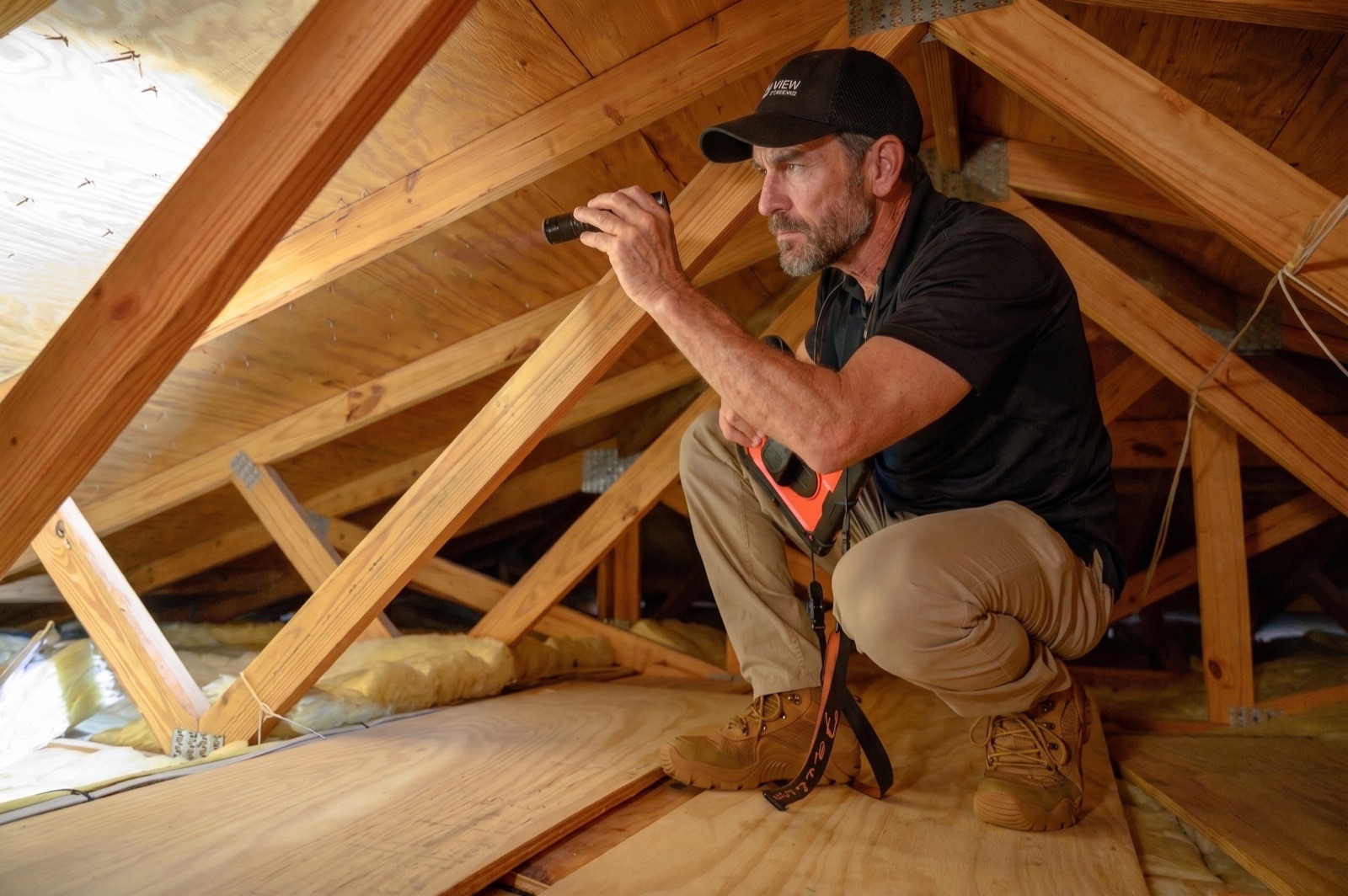
A home inspection in Miami happens during the buyer's inspection period, which is 15 calendar days on the standard Florida AS IS contract unless the contract sets a different number. The inspection itself takes 1.5 to 4 hours for most condos and single-family homes, and a TruView Inspections report arrives the same day with photos, findings, and repair recommendations the buyer can use to negotiate or cancel.
This guide walks Miami buyers through every stage of the inspection, from booking to closing. TruView Inspections is a Florida-licensed home inspection company (License H17112/CRC1330244) headquartered in Coral Gables that has completed more than 40,000 inspections across South and Central Florida.
Key Takeaways
- The Florida Realtors/Florida Bar AS IS contract gives buyers a 15-calendar-day inspection period by default, counted from the contract's Effective Date.
- A standard home inspection takes 2 to 4 hours for a single-family home and 1.5 to 3 hours for a condo.
- Most Florida insurance carriers require a 4-point inspection on homes 25 years or older, and a wind mitigation report can lower windstorm premiums by roughly 10% to 45%.
- TruView Inspections delivers the full report the same day and includes a free 4-point and wind mitigation inspection with every full home inspection.
- Under the AS IS contract, a buyer can cancel for any reason before the inspection period ends by giving written notice.
What Should You Expect at a Home Inspection in Miami?
A Miami home inspection follows five stages: booking the inspection, preparing the property, the on-site inspection, reviewing the report, and acting on the findings before the inspection period closes. Each stage has a deadline tied to the purchase contract, so the order matters as much as the inspection itself.
- Book the inspection within the first 1 to 3 days after the contract is signed.
- Prepare the property so the inspector can reach the attic, electrical panel, water heater, and air handler.
- Attend the inspection in person or review it remotely through photos and video.
- Read the report and sort the findings by safety, cost, and routine maintenance.
- Act on the findings by requesting repairs, asking for a credit, or cancelling before the deadline.
A Florida home inspection is a visual evaluation, not a guarantee. Florida's home inspection Standards of Practice (Florida Administrative Code Rule 61-30.801) define the inspection as a report on the visible and apparent condition of the home's installed systems at the time of the inspection, and state that a home inspection does not predict future conditions.
When Should You Book a Home Inspection in Florida?
A Miami buyer should book the home inspection immediately after the purchase contract is fully signed, ideally within 1 to 3 days. The inspection period on the Florida AS IS contract defaults to 15 calendar days after the Effective Date if no other number is written in, and every day spent waiting for an inspection slot is a day lost for negotiation.
The inspection period is counted in calendar days, not business days, so weekends count. Under the contract's time-computation rule, a deadline that falls on a Saturday, Sunday, or national legal holiday rolls forward to the next business day.
Buyers in competitive Miami bidding situations sometimes agree to an inspection period shorter than 15 days. A shorter window makes a same-day report more valuable, because every day spent waiting for a report is a day taken away from negotiation.
Check your own contract. The 15-day figure is the default on the AS IS form only. Your contract may set a different period, and your real estate agent or attorney is the authority on your specific deadlines.
Which Inspections Does a Miami Home Need?
Every Miami home purchase should start with a full home inspection, and the property's age, type, and location decide which additional inspections are needed. The table below matches common Miami property types to the inspections that usually apply.
| Property Type | Inspections to Consider | Why |
|---|---|---|
| Condo unit | Condo inspection, wind mitigation, 4-point if the building is 25+ years old | Covers the unit's interior systems and balcony; the association maintains the roof and common areas |
| Single-family home, 25+ years old | Home inspection, 4-point, wind mitigation | Most Florida carriers require a 4-point to write a policy on an older home |
| Single-family home, newer | Home inspection, wind mitigation | A wind mitigation report can qualify the home for hurricane discounts |
| New construction | Pre-drywall and pre-closing inspections | The pre-drywall visit is the last chance to see inside the walls |
| Luxury or waterfront home | Luxury home inspection with thermal imaging | Covers pools, seawalls, docks, and salt-air corrosion |
| Any home with signs of moisture | Mold inspection | South Florida humidity runs 70% to 80% year-round |
What Is a 4-Point Inspection and Does a Miami Home Need One?
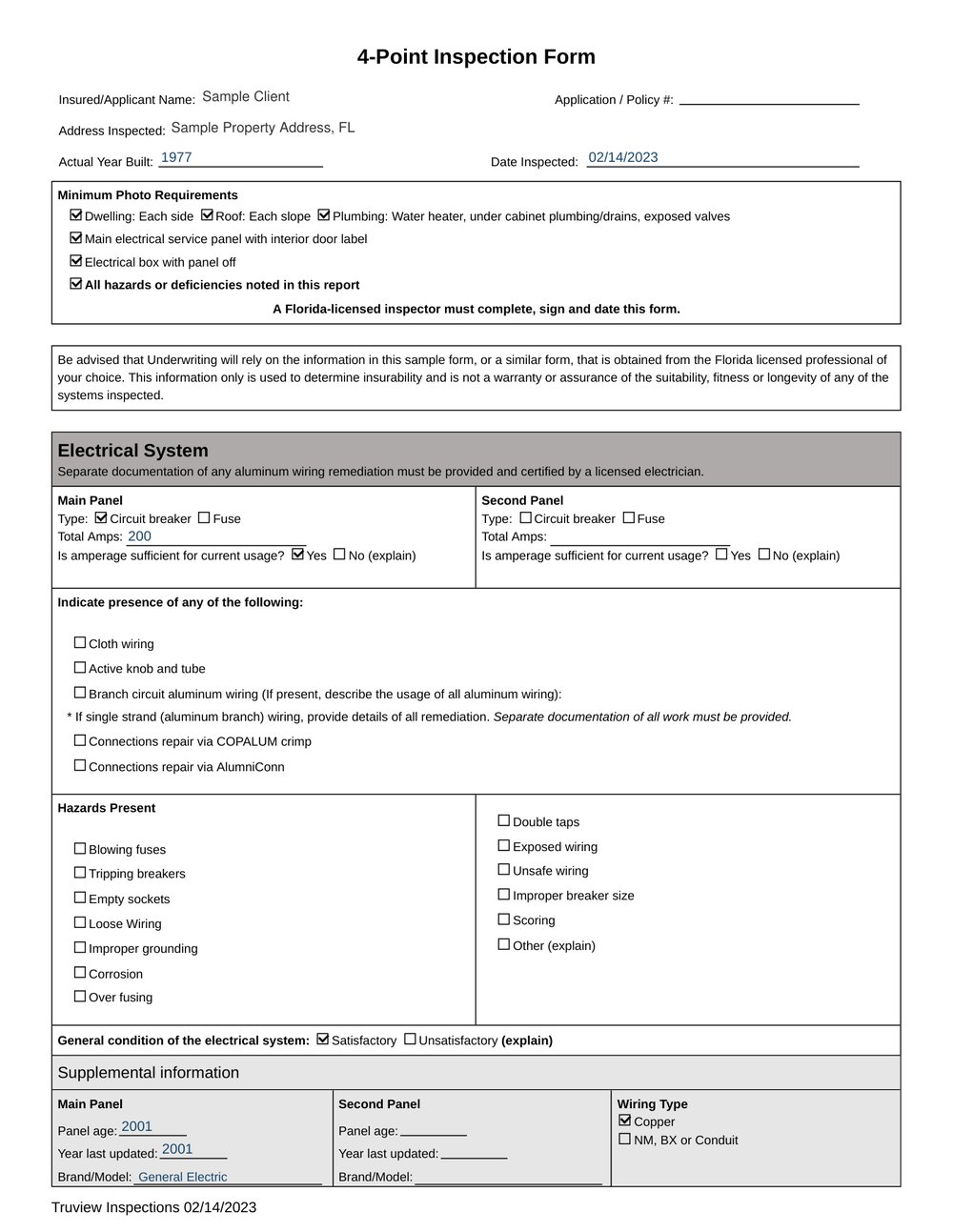
A 4-point inspection is an insurance inspection of four systems: roof, electrical, plumbing, and HVAC. Most Florida insurance carriers require a 4-point on homes 25 years or older, and some carriers have lowered that threshold to 20 or 15 years. TruView Inspections includes the 4-point free with every full home inspection; the standalone price is $130 to $250.
What Is a Wind Mitigation Inspection?
A wind mitigation inspection documents a home's hurricane-resistant features on Florida's OIR-B1-1802 form, including roof shape, roof deck attachment, roof-to-wall connections, and opening protection. Florida insurers use the form to apply windstorm discounts, which range from roughly 10% to 45% depending on the features present. A wind mitigation report stays valid for 5 years.
Do Miami Condo Buyers Need to Check Building Recertification?
Miami condo buyers should confirm the building's recertification status before closing, because an overdue recertification can lead to costly special assessments. Miami-Dade County requires recertification at 30 years for most buildings, and at 25 years for condo and co-op buildings three stories or taller within 3 miles of the coast built in 1998 or later, then every 10 years after. TruView's building recertification page explains the process.
How Long Does a Home Inspection Take?
A home inspection takes 2 to 4 hours for a typical single-family home and 1.5 to 3 hours for a condo. Larger homes, older homes, and homes with pools or detached structures take longer, and luxury estates can take a full day.
| Inspection | Typical Time On Site | Results |
|---|---|---|
| Condo inspection | 1.5 to 3 hours | Same day |
| Single-family home inspection | 2 to 4 hours | Same day |
| Luxury home inspection | 4 to 8 hours | Same day |
| Mold inspection | 1.5 to 2.5 hours | Lab results in 24 to 72 hours |
| Radon test | Devices stay in place 48 to 96 hours | Accredited lab analysis after pickup |
Tests that need lab analysis, such as mold and radon, should be booked on the same day as the home inspection. Lab turnaround time counts against the inspection period, so starting those tests early protects the buyer's deadline.
How Should You Prepare for a Home Inspection?
Preparing for a home inspection means making sure the inspector can reach every major system and that all utilities are on. A home inspector cannot test what is locked, blocked, or shut off, and anything left uninspected shows up in the report as a limitation instead of a finding.
How Should a Buyer Prepare?
- Confirm with the listing agent that water, electricity, and gas are on for the inspection.
- Write down questions about specific concerns, such as a stained ceiling or an older roof.
- Ask the seller for the roof age, permit history, and any past insurance claims.
- For a condo, ask the association or listing agent for access to the unit's balcony, storage, and electrical panel.
- Read TruView's home inspection checklist for first-time buyers in Florida to see what the inspector will cover.
How Should a Seller Prepare?
- Clear a path to the attic hatch, electrical panel, water heater, and air handler.
- Unlock gates, sheds, garages, and any interior doors.
- Replace burned-out bulbs so a dead bulb is not reported as an electrical problem.
- Secure pets or take them off the property during the inspection.
Sellers who want to find problems before a buyer does can order a pre-listing inspection; TruView explains the approach in selling your home in Florida: get it inspected first.
What Happens on Inspection Day?
On inspection day, a licensed inspector walks the property from the roof to the foundation and documents the condition of the structure, roof, electrical, plumbing, HVAC, interior, exterior, insulation, and built-in appliances. TruView's home inspection covers more than 200 checkpoints and uses drone access for steep or fragile tile roofs.
The inspector records each finding with photos as the inspection happens. TruView reports include HD photos, 360-degree images, and video, so every finding in the report can be tied to a specific picture of the problem.
Should You Attend Your Home Inspection?
Attending the home inspection is recommended but not required. A buyer who attends the end of the inspection can walk through the major findings with the inspector and ask questions in person. A buyer who is out of town can review the same findings remotely through the report's photos, 360-degree images, and video.
How Do You Read a Home Inspection Report?
A home inspection report lists the deficiencies the inspector observed and recommends a next step for each one. Florida's Standards of Practice require the inspector to recommend correction, monitoring, or further evaluation of each deficiency observed, and to report systems that are significantly deficient or at the end of their service life.
The fastest way to read a report is to sort every finding into three groups:
- Safety issues: exposed wiring, a defective electrical panel, missing railings, or gas leaks. These items belong at the top of any repair request.
- Major cost items: a roof near the end of its life, an aging air conditioner, or active leaks. These items drive credits and price reductions.
- Maintenance items: caulking, loose fixtures, or minor wear. These items are normal in any home and rarely worth negotiating.
TruView's reports include AI-generated repair cost estimates, which give buyers a starting dollar figure for each finding before they talk to contractors. Buyers can review real examples on TruView's sample reports page.
For a deeper walkthrough of report sections, photos, and repair recommendations, read TruView's guide on how to understand your home inspection report.
What Problems Do Miami Home Inspections Commonly Find?
Miami home inspections commonly find aging electrical panels, older plumbing, roof damage from salt air and sun, and moisture intrusion. These findings are common in Miami-Dade housing stock:
- Federal Pacific (Stab-Lok) and Zinsco panels in homes built before 1990, which most Florida carriers flag as fire hazards.
- Polybutylene plumbing in homes built between 1978 and 1995.
- Salt-air and UV roof deterioration that shortens the life of shingle and tile roofs near the coast.
- Moisture intrusion around windows, balconies, and waterfront foundations.
What Can You Do After the Home Inspection?
After the home inspection, a Miami buyer has four options: accept the property as it is, ask the seller to make repairs, ask for a credit or price reduction, or cancel the contract. Every one of those decisions must be made before the inspection period ends.
- Accept the property. The buyer moves forward and uses the report as a maintenance plan.
- Request repairs. The buyer asks the seller to fix specific items, usually safety issues, before closing.
- Request a credit or price reduction. The buyer asks for money off to cover repairs after closing, which lets the buyer choose the contractor.
- Cancel the contract. On the AS IS contract, the buyer can cancel for any reason by delivering written notice before the inspection period expires.
On the AS IS contract, the seller is not required to agree to any repair or credit request. A buyer who asks for concessions should leave enough time before the deadline to cancel if the seller says no, because missing the deadline can put the escrow deposit at risk.
Repair and credit requests work best when they are specific and documented. A request that cites the report's photo and the estimated repair cost for each item is harder for a seller to dismiss than a general list of concerns.
How Much Does a Home Inspection Cost in Miami?
A home inspection in Miami typically costs $400 to $700 for a single-family home, and condo inspections start around $300. TruView Inspections includes a 4-point and wind mitigation inspection free with every full inspection, which saves $260 to $500 compared with booking them separately. The full breakdown by property type is in TruView's 2026 Miami home inspection cost guide.
Why Do Miami Buyers Choose TruView Inspections?
Miami buyers choose TruView Inspections for same-day reports, bundled insurance inspections, and a 200% money-back guarantee. TruView is rated 4.9 out of 5 across more than 2,000 Google reviews and has inspected more than $4.2 billion in real estate transactions.
- Same-day reports with HD photos, 360-degree images, video, and AI repair cost estimates.
- Free 4-point and wind mitigation inspections with every full home inspection.
- 200% money-back guarantee: if a client is not satisfied within 24 hours of receiving the report, TruView refunds the fee and pays for a second company to re-inspect.
- InterNACHI certified and BBB accredited, with a free moving concierge included with every inspection.
TruView's home inspector Miami team covers the City of Miami and every Miami-Dade neighborhood. Call (305) 908-3835 or book online.
Frequently Asked Questions About Miami Home Inspections
How long is the inspection period in Florida?
The inspection period on the Florida Realtors/Florida Bar AS IS contract is 15 calendar days after the Effective Date if the contract does not set a different number. Buyers and sellers can agree to a shorter or longer period, and the number written in the contract controls.
How long does a home inspection take in Miami?
A home inspection in Miami takes 2 to 4 hours for a single-family home and 1.5 to 3 hours for a condo. Luxury homes and estates can take 4 to 8 hours. TruView Inspections delivers the report the same day.
Can a buyer back out after a home inspection in Florida?
Yes. Under the Florida AS IS contract, a buyer can cancel for any reason by delivering written notice to the seller before the inspection period expires. A buyer who misses the deadline may lose the right to cancel under the inspection clause.
Does a home inspection include a 4-point inspection?
A standard home inspection does not automatically include a 4-point inspection, because the 4-point is a separate insurance form. TruView Inspections includes a free 4-point and a free wind mitigation inspection with every full home inspection.
Should a buyer attend the home inspection?
Attending the home inspection is recommended but not required. TruView's reports include HD photos, 360-degree images, and video, so a buyer who cannot attend can still review every finding remotely.
What happens if a home inspection finds problems?
If a home inspection finds problems, the buyer can ask the seller for repairs, ask for a credit or price reduction, accept the property as it is, or cancel before the inspection period ends. On the AS IS contract, the seller can decline any repair or credit request.
This guide is general information for Miami home buyers, not legal advice. Contract terms vary, and your real estate agent or attorney should confirm the deadlines in your specific contract.