
A roof inspection tells a Florida homeowner three things: how much useful life the roof has left, whether storms or water have damaged it, and whether it will satisfy a home insurance carrier. Most Florida homeowners need one at four points: when an insurer questions a roof that is 15 years or older, after a hurricane or strong storm, before hurricane season starts on June 1, and before listing a home for sale. A standalone roof inspection from TruView costs $150 to $300 for most homes and includes drone imagery and a same-day report.
Why Do Roof Inspections Matter More in Florida Than in Other States?
Roof condition drives Florida home insurance decisions more than any other part of the house. Florida carriers check roof age and condition before they write or renew a policy, and many will not insure a roof at the end of its useful life.
Replacing a roof in Florida can cost $15,000 to $50,000 or more, depending on home size and material. A roof inspection that costs a few hundred dollars shows whether that expense is years away or already due.
Florida roofs also age faster. Hurricane season runs from June 1 to November 30, and the rest of the year brings intense UV, heavy rain, and humidity. Wind can lift tile edges and ridge caps, and horizontal rain strips granules from shingles. From the ground, most of that damage is invisible.
When Should a Florida Homeowner Get a Roof Inspection?
Florida homeowners should schedule a roof inspection at these five moments:
- When an insurer questions an older roof. A roof 15 years or older can trigger a replacement demand at renewal. An inspection showing 5 or more years of remaining life can prevent a refusal based on age alone (see the Florida law section below).
- After a hurricane or major storm. TruView recommends a post-storm roof inspection after any storm with sustained winds over 50 mph, both to find new damage and to document it for an insurance claim.
- Before hurricane season. An inspection in April or May leaves time to repair loose tiles, failed flashing, or clogged drainage before June 1.
- Before selling a home. A pre-listing roof report lets a seller fix problems or price them in before a buyer’s inspector finds them.
- When you see signs of a leak. Ceiling stains, attic moisture, or missing tiles after wind are reasons to inspect now, not at the next renewal.
Buying a home instead? Use the Miami roof inspection checklist for home buyers, which covers what to check before closing.
What Does Florida Law Say About Roof Age and Home Insurance?
Florida Statute 627.7011(5) limits how insurers can use roof age. Under this law, an insurer may not refuse to issue or renew a homeowner’s policy solely because the roof is less than 15 years old.
For a roof that is 15 years or older, the homeowner can have the roof inspected by an “authorized inspector.” If the inspection shows the roof has 5 years or more of useful life remaining, the insurer may not refuse to issue or renew the policy solely because of roof age.
The statute defines an authorized inspector as an inspector approved by the insurer who is one of the listed professionals, which include licensed home inspectors, building code inspectors, contractors, engineers, and architects. Ask your carrier which inspectors it approves before you book.
The law covers refusals based on age alone. An insurer can still act on the roof’s actual condition, which is why the inspection report matters: it documents the material, estimated age, condition rating, and remaining useful life in writing.
Florida’s roof age rule. An insurer may not refuse to issue or renew a homeowner’s policy on a roof less than 15 years old solely because of its age. For roofs 15 years or older, an insurer may not refuse coverage solely because of roof age if an authorized inspector finds 5 or more years of useful life remaining.
Florida Statutes, Section 627.7011(5)How Does a Roof Inspection Help After a Hurricane?
A post-storm roof inspection finds and documents damage while the evidence is fresh. Common Florida storm damage includes wind-lifted tile edges, displaced ridge and hip caps, granule-stripped shingles, torn soffit and fascia, and dislodged vent covers.
Drone imagery matters here because much of this damage cannot be seen from the ground, and steep tile roofs are unsafe to walk after a storm. A TruView post-storm report is formatted for insurance claim submission, with annotated photos of each damaged area.
Timing matters too. Under Florida Statute 627.70132, notice of a new or reopened property insurance claim must be given to the insurer within 1 year after the date of loss, and a supplemental claim within 18 months. For hurricanes and windstorms, the date of loss is the date NOAA verifies for the storm.
What Is Florida’s 25 Percent Roof Rule?
Florida Building Code Section 706.1.1 says no more than 25 percent of a roof or roof section may be repaired, replaced, or recovered in any 12-month period unless the entire roof or roof section is brought up to current code. For older roofs, that can turn a storm repair into a full replacement.
Senate Bill 4-D (2022) added an exception. If the roof was built, repaired, or replaced to the 2007 Florida Building Code or a later edition, only the repaired portion must meet current code, even when 25 percent or more is repaired. The 2007 code took effect on March 1, 2009.
A roof inspection report records the roof material, estimated age, and condition. That, together with the roof’s permit history, helps a homeowner and roofer tell which side of the rule a repair falls on before work starts.
What Does a TruView Roof Inspection Include?
A TruView roof inspection covers the full roof surface and the structure below it:
- Drone-assisted surface coverage: HD aerial imagery of every roof section, including steep-pitch tile roofs that cannot be safely walked.
- Roof covering condition: shingle, tile, flat membrane (TPO, modified bitumen, BUR), or metal, checked for cracking, lifting, granule loss, missing material, and wear.
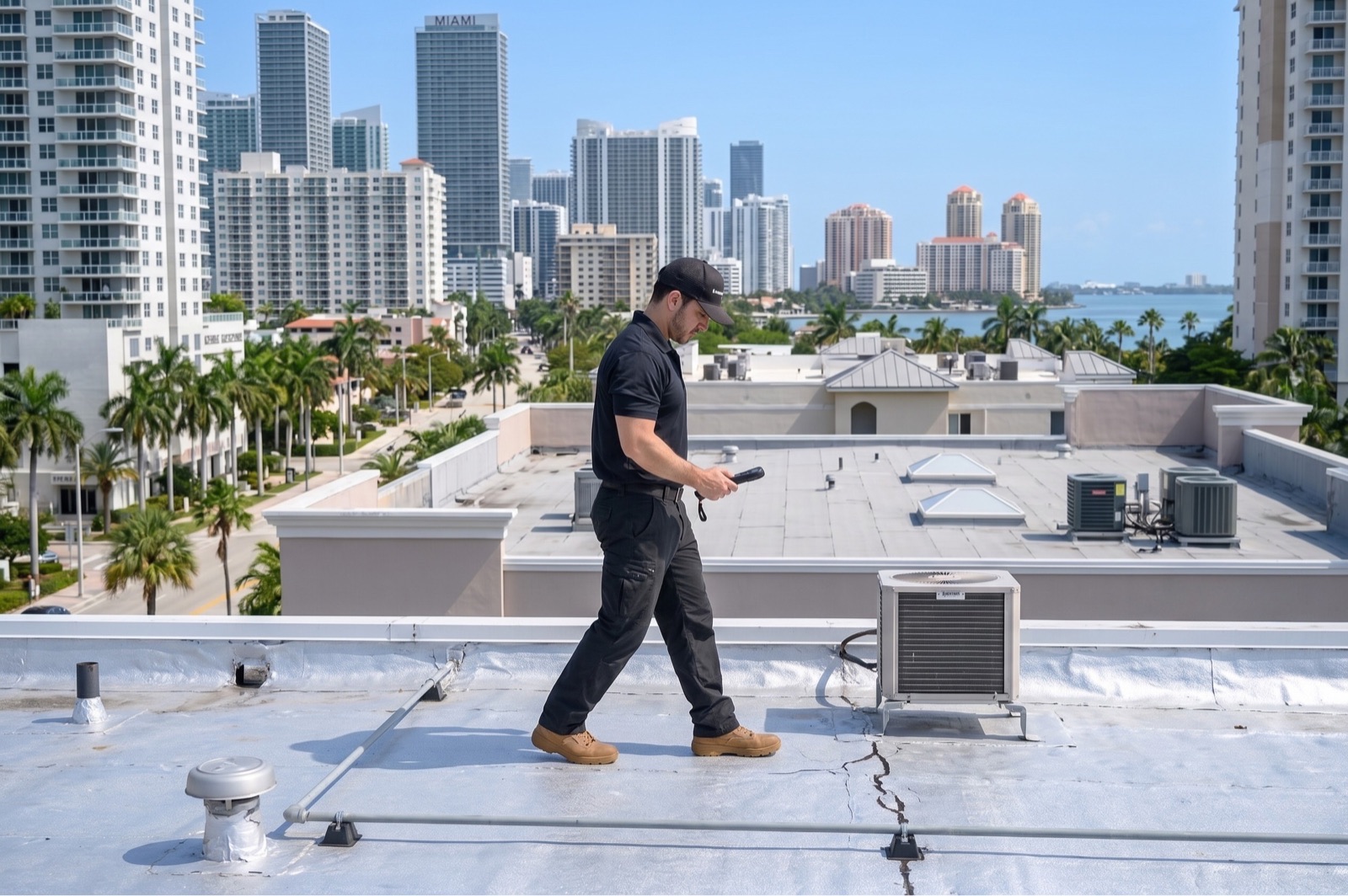
- Flashing and penetrations: vents, pipes, skylights, chimneys, and rooftop HVAC checked for failed sealant and water entry points.
- Gutters and drainage: gutters, downspouts, and flat-roof drains checked for blockage, slope, and ponding.
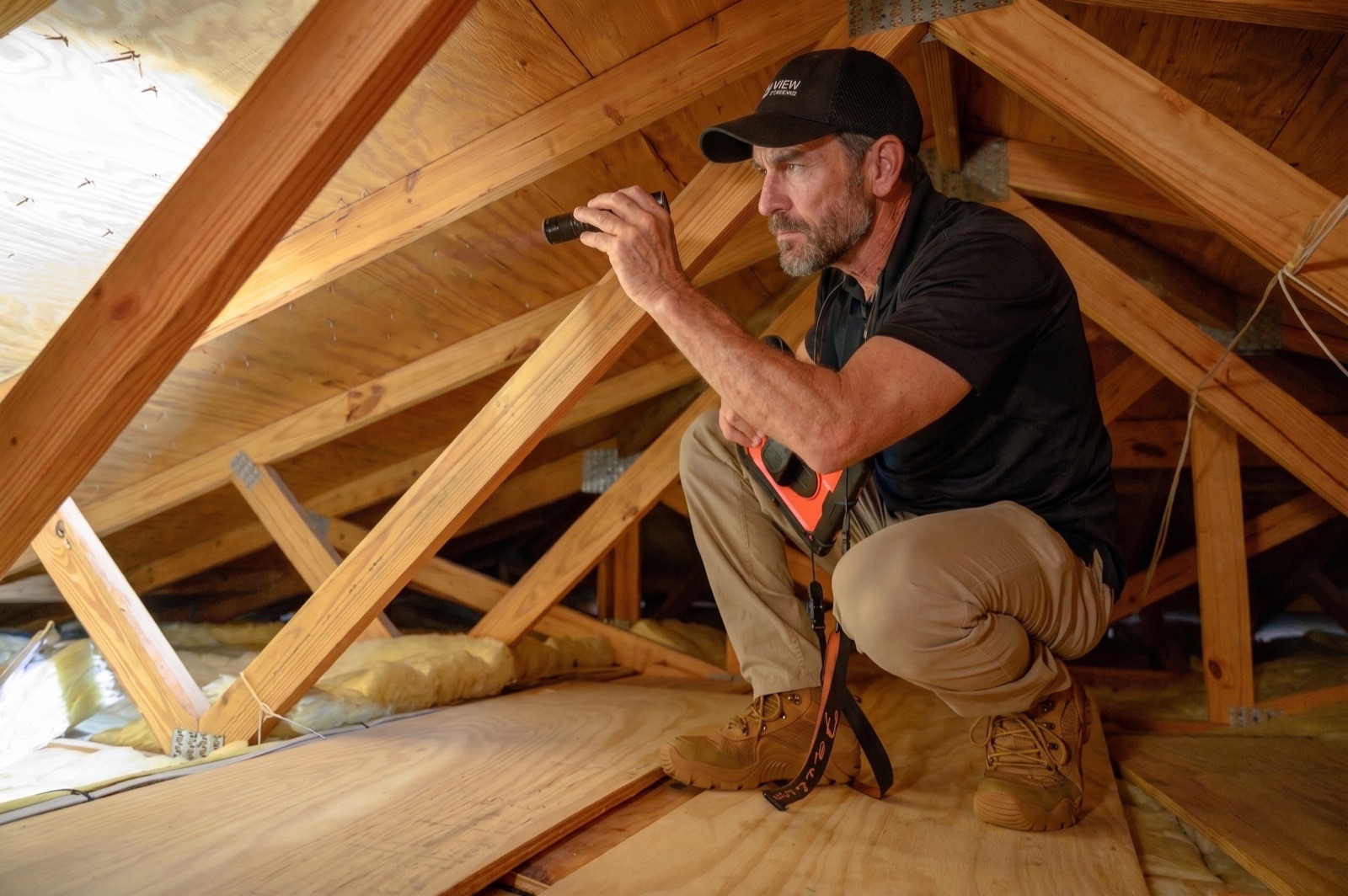
- Attic and roof deck: the deck and framing checked from the attic for soft spots, rot, past or active leaks, and ventilation.
- Insurance-ready report: roof material, estimated age, condition rating, and insurance submittal guidance, delivered the same day.
How Much Does a Roof Inspection Cost in Florida?
A standalone residential roof inspection from TruView costs $150 to $300, based on home size and roof complexity. Large homes, multi-unit buildings, and commercial roofs are quoted by square footage.
| Property | TruView Price | What Changes the Price |
|---|---|---|
| Small residential (up to about 2,000 sq ft) | $150 to $200 | Single-pitch roof |
| Standard residential (2,000 to 4,500 sq ft) | $200 to $300 | Complex rooflines, many penetrations, tile and flat combinations |
| Large home or commercial | $300+ (call for a quote) | Square footage and complexity |
Every TruView roof inspection includes drone imagery, a written condition report, insurance-ready documentation, and same-day delivery. Adding a roof inspection to a full home inspection may cost less than booking it on its own.
Roof Inspection vs. 4-Point vs. Wind Mitigation: What Is the Difference?
Florida insurers use three different inspections that all look at the roof. Each one answers a different question:
| Inspection | What It Answers | TruView Standalone Price |
|---|---|---|
| Roof inspection | What condition is the roof in, and how much useful life does it have left? | $150 to $300 |
| 4-point inspection | Are the roof, HVAC, electrical, and plumbing acceptable to insure? Often required on homes 25 years or older. | $130 to $250 |
| Wind mitigation inspection | Which hurricane-resistant features does the home have? Recorded on the state OIR-B1-1802 form for premium discounts. | $130 to $250 |
A 4-point and a wind mitigation inspection only touch on the roof as part of a wider insurance form. A dedicated roof inspection goes deeper: full surface coverage, attic deck assessment, and a condition rating. Both the 4-point and wind mitigation inspections are included free with a full TruView home inspection.
How Can Florida Homeowners Prepare a Roof for Hurricane Season?
Florida homeowners can lower storm risk with a few checks before June 1:
- Trim tree limbs that hang over the roof.
- Clear gutters, downspouts, and flat-roof drains so water can drain.
- From the ground, look for missing, cracked, or slipped tiles or shingles.
- Check the attic for water stains, damp insulation, or daylight through the deck.
- Secure or store loose items near the roof line that wind could throw.
- Book a professional roof inspection to document condition before storm season, so any post-storm damage is easy to show as new.
Frequently Asked Questions About Florida Roof Inspections
How often should a Florida roof be inspected?
A Florida roof should be inspected at least once a year, ideally before hurricane season starts on June 1, and again after any storm with sustained winds over 50 mph. Roofs 15 years or older benefit from an inspection before each insurance renewal.
Can my insurer refuse to renew my policy because my roof is old?
Under Florida Statute 627.7011(5), an insurer may not refuse to issue or renew a policy solely because a roof is less than 15 years old. For a roof 15 years or older, an insurer may not refuse solely because of age if an authorized inspector finds 5 or more years of useful life remaining. Insurers can still act on a roof’s actual condition.
How much does a roof inspection cost in Florida?
A standalone residential roof inspection from TruView costs $150 to $300, based on home size and roof complexity. Large homes and commercial roofs are quoted by square footage. Every inspection includes drone imagery and a same-day report.
Can a home inspector do a roof inspection for insurance?
Yes, if the insurer approves the inspector. Florida Statute 627.7011(5) lists licensed home inspectors among the professionals who can serve as an authorized inspector for a roof age review. Ask your carrier which inspectors it accepts before scheduling.
How long do I have to report hurricane roof damage to my insurer in Florida?
Under Florida Statute 627.70132, notice of a new or reopened claim must be given within 1 year after the date of loss, and notice of a supplemental claim within 18 months. For hurricanes, the date of loss is the date NOAA verifies for the storm.
Need a current record of your roof’s condition? Schedule a roof inspection with TruView, or call your regional team to add one to a full home inspection.